Dedicated to advancing our understanding of Saturn's magnificent ring systems
Founded in 2019, Saturn Rings Observatory emerged from a collaborative vision of planetary scientists who recognized the need for a dedicated platform to synthesize and communicate research on Saturn's ring systems.
Our mission is to serve as a bridge between cutting-edge planetary science research and the broader scientific community, students, and space enthusiasts. We combine rigorous astrophysics, orbital mechanics, spectroscopy, and mission data analysis to provide scientifically accurate yet accessible insights into one of the Solar System's most enigmatic features.
In the wake of the groundbreaking Cassini–Huygens mission, which revolutionized our understanding of Saturn and its rings, we recognized the importance of making this wealth of data and discoveries accessible to researchers, educators, and the public alike. Our platform continues to analyze mission data, theoretical models, and ongoing observations to advance ring science.

An interdisciplinary approach to planetary ring science
We apply principles of gravitational dynamics, orbital resonances, and celestial mechanics to understand the forces shaping Saturn's rings, from shepherd moons to density waves.
Through spectroscopic analysis, we investigate the chemical composition of ring particles, including water ice, organics, and silicate materials that tell the story of ring formation.
We examine Saturn's rings within the broader context of planetary system formation and evolution, addressing questions of origin, age, and long-term stability.
Leading experts in planetary ring science
Principal Investigator & Astrophysicist
Ph.D. in Planetary Science from Caltech. Dr. Martinez specializes in gravitational dynamics and orbital resonances in planetary ring systems. Her research focuses on the role of shepherd moons in maintaining ring structure and the formation of gaps and divisions. With 15 years of experience analyzing Cassini data, she has published over 40 peer-reviewed papers on ring dynamics.
Senior Research Scientist
Ph.D. in Astronomy from MIT. Dr. Chen's expertise lies in spectroscopic analysis and the chemical composition of ring particles. His work on the albedo variations and particle size distribution has provided crucial insights into ring formation theories. He has been instrumental in developing computational models that simulate ring particle collisions and evolution.
Computational Physicist
Ph.D. in Computational Astrophysics from University of Cambridge. Dr. Andersson develops sophisticated N-body simulations to model ring particle interactions over geological timescales. Her work on ring viscosity and angular momentum transport has challenged previous assumptions about ring stability and longevity. She leads our computational modeling research group.
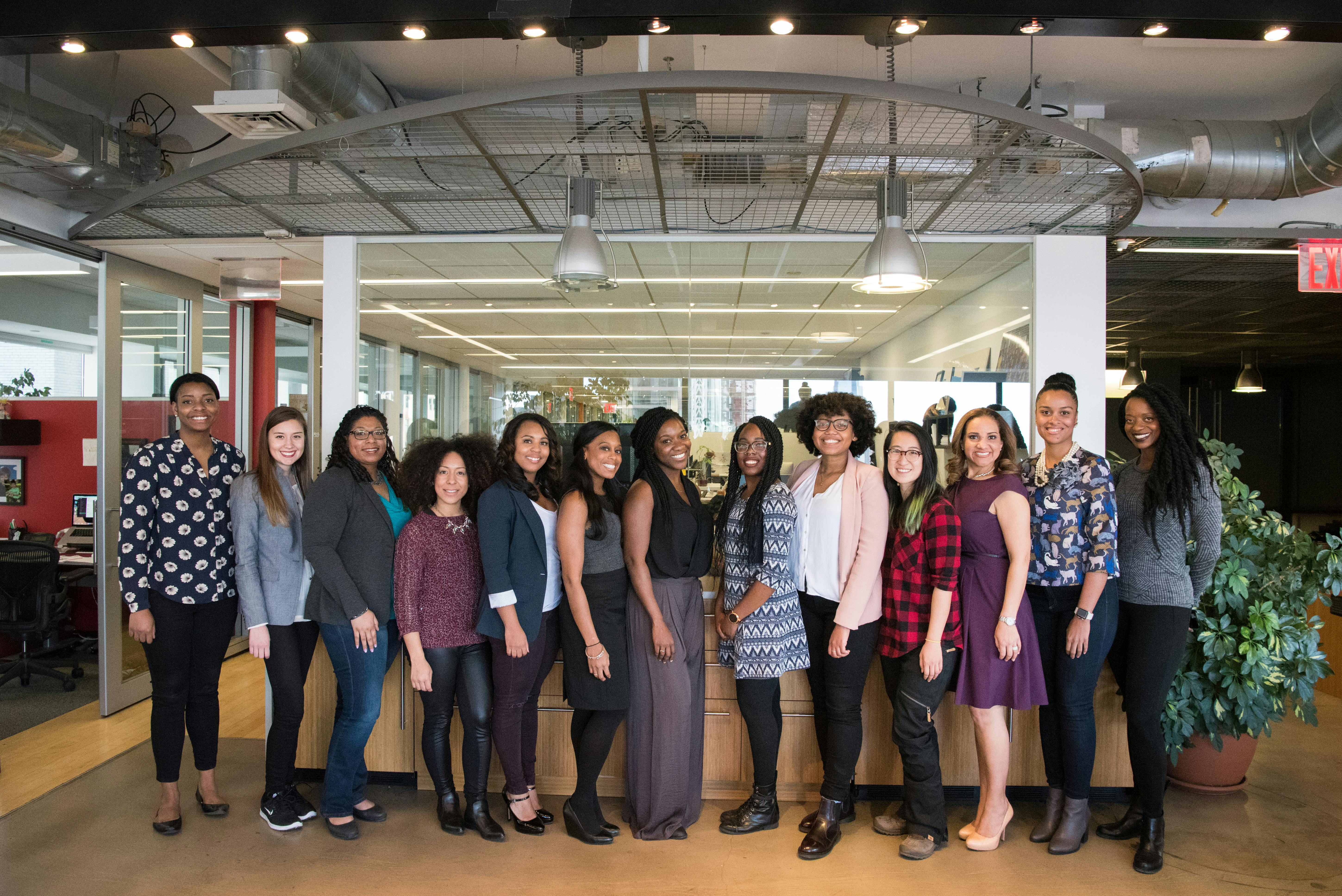
Our team collaborating on mission data analysis
Saturn Rings Observatory operates at the intersection of multiple scientific disciplines, recognizing that a comprehensive understanding of planetary ring systems requires diverse perspectives and methodologies.